
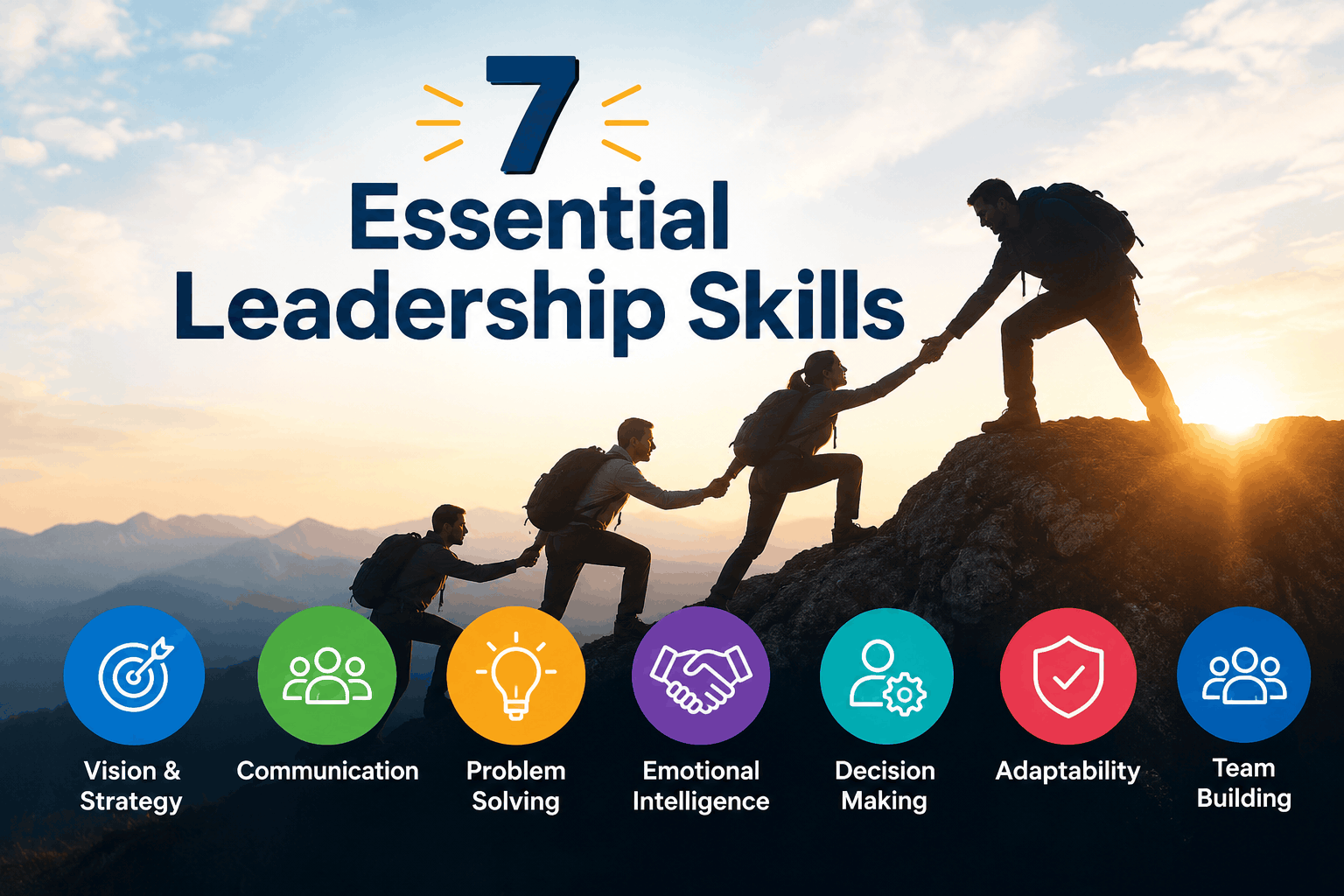
Leadership asks you to make difficult decisions, resolve disagreements, motivate employees, and keep a team moving toward shared goals. These responsibilities require skills that go beyond technical expertise or job titles. They depend on how well you communicate, understand people, plan for the future, and respond when things go wrong.
A leadership coach in Toronto can help you strengthen these abilities through personalized guidance, practical exercises, and feedback tailored to your professional challenges.
Whether you are preparing for your first management role or looking to become a more effective executive, developing the right leadership skills can help you lead with greater confidence and clarity.
1. Communication and Active Listening Skills for Leaders
Clear communication helps leaders turn expectations into action. Employees need to understand their responsibilities, priorities, and performance goals without guessing what their manager means.
Another effective listening techniques for managers is to do it attentively. Instead of preparing a response while someone else speaks, effective leaders pay attention, ask relevant questions, and clarify what they hear. This approach helps prevent misunderstandings and makes employees feel respected.
How to develop this skill:
- Give employees your full attention during conversations.
- Explain expectations using specific, straightforward language.
- Ask follow-up questions before reaching conclusions.
- Adapt your communication style to different people and situations.
2. Emotional Intelligence and Self-Awareness in Leadership
Leadership often involves pressure, competing priorities, and emotionally charged conversations. Emotional intelligence helps leaders recognize their feelings, understand other people’s perspectives, and choose appropriate responses rather than reacting impulsively.
Self-awareness is an important starting point. Leaders who understand their strengths, weaknesses, and behavioral patterns can identify how their actions affect the team. They can also recognize when frustration, stress, or personal assumptions influence their decisions.
To strengthen emotional intelligence, reflect on challenging interactions, seek honest feedback, and practice pausing before responding to stressful situations. Developing empathy also helps you recognize what employees might be experiencing, even when their perspectives differ from yours.
3. Strategic Thinking and Decision-Making Skills
Strong leaders connect everyday tasks to broader business objectives. Critical thinking for business leaders helps them recognize opportunities, anticipate challenges, and decide where to invest limited time and resources.
Decision-making requires a related set of skills. Leaders must assess available information, compare alternatives, consider potential consequences, and act without always having complete certainty.
A leadership coach can help you examine your decision-making habits and identify where assumptions or short-term pressures affect your judgment.
Practical ways to improve strategic thinking include:
- Define clear objectives before choosing a course of action.
- Evaluate the risks and benefits of different options.
- Consider how decisions will affect employees, customers, and long-term goals.
- Review outcomes to identify lessons for future decisions.
4. Workplace Conflict Resolution Skills for Leaders
Disagreements are inevitable in workplaces where people have different responsibilities, priorities, and opinions. The challenge is preventing those disagreements from damaging relationships or slowing progress.
Effective leaders address conflict early and focus on the underlying issue rather than assigning blame. They listen to the people involved, establish common ground, and guide conversations toward workable solutions.
For example, if two team members disagree about project ownership, a manager can clarify responsibilities, discuss workload concerns, and establish a shared plan for moving forward.
Developing conflict resolution skills also means recognizing when a problem requires a direct conversation, mediation, or support from human resources. Handling disagreements fairly helps maintain professional relationships and encourages employees to raise concerns before they escalate.
5. Delegation and Accountability in Leadership
Delegation allows leaders to distribute work according to employees’ skills, experience, and development goals. It also creates space for managers to focus on planning, decision-making, and other responsibilities that require their attention.
However, effective delegation involves more than assigning tasks. Leaders must communicate the desired outcome, establish deadlines, provide appropriate resources, and explain how progress will be evaluated. Accountability completes the process. Employees need ownership of their responsibilities, while managers must remain available to provide guidance and address obstacles.
Effective task allocation strategies include:
- Match assignments to employees’ abilities and development needs.
- Explain the expected results and relevant deadlines.
- Agree on progress checkpoints without micromanaging.
- Address missed commitments fairly and recognize successful work.
Business planning and goal setting help teams work independently while staying aligned with organizational goals and long-term priorities.
6. Adaptability and Problem-Solving Skills for Leaders
Business conditions rarely remain predictable. Projects change direction, customer expectations evolve, and unexpected obstacles disrupt carefully prepared plans. Adaptable leaders respond to these changes without losing sight of their priorities.
Problem-solving helps turn uncertainty into manageable action. Instead of immediately accepting the first available solution, effective leaders identify the root cause, gather relevant information, explore alternatives, and evaluate the results. Creative problem-solving can be especially useful when familiar methods no longer work. A team facing repeated project delays, for instance, might need to reconsider its approval process rather than simply work longer hours.
To develop adaptability, remain open to feedback, question established assumptions, and treat setbacks as opportunities to learn. Leaders who combine flexibility with sound judgment can adjust their approach while providing their teams with a sense of direction.
7. Team Building and Employee Motivation Skills
A team performs better when employees understand their purpose, trust their colleagues, and believe their contributions matter. Leaders help create these conditions by establishing shared goals, encouraging collaboration, and recognizing individual effort.
Building trust as a leader requires consistency. Employees are more likely to speak openly when managers follow through on commitments, explain important decisions, and respond to concerns without dismissing them.
Social awareness in leadership also plays a role. Recognizing differences in communication styles, motivations, and working preferences helps leaders support employees without assuming everyone needs the same approach. Employee motivation does not depend on praise alone. Clear expectations, meaningful responsibilities, opportunities to develop, and fair treatment can all influence engagement.
Leaders can strengthen team relationships by holding regular check-ins, celebrating progress, addressing concerns promptly, and practicing creative problem-solving at work. These habits help build a workplace where people can take responsibility and work toward common objectives.
How Can a Leadership Coach in Toronto Help Improve Leadership Skills?
Leadership coaching provides a structured way to identify development areas and put new skills into practice. Rather than relying on general advice, a coach can help you examine real workplace situations, recognize recurring patterns, and develop strategies suited to your responsibilities.
Coaching may address communication, emotional intelligence, strategic planning, conflict resolution, delegation, or other challenges relevant to your role. Progress can be evaluated through reflection, feedback, and specific goals established during the coaching process.
Laetitia Villetorte provides leadership coaching services for professionals who want to strengthen their leadership abilities and navigate workplace challenges more effectively. Working with Laetitia can help you clarify your development priorities, build practical strategies, and approach leadership responsibilities with greater intention.

